
News
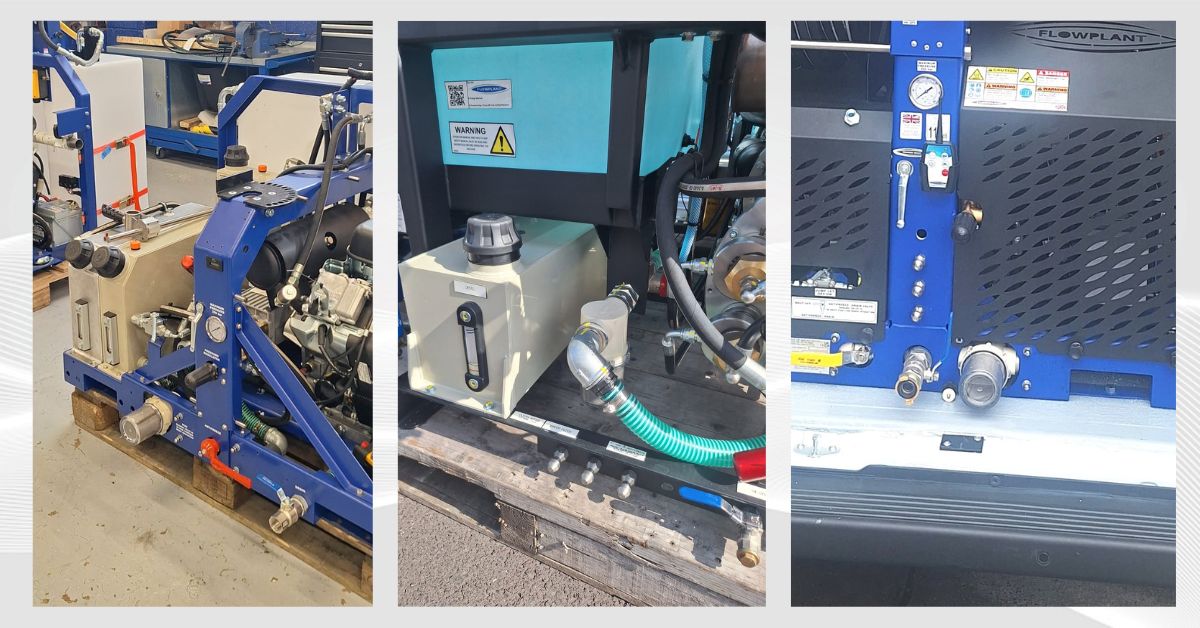
How often should you check your Water Jetter Inlet Filter?
One simple maintenance task that could save you thousands.
It’s easy to get too focused on hoses, nozzles and pumps when operating high pressure equipment. But the beating heart of your machine actually lies in one of the least expensive components – The inlet water filter.
Whether you’re clearing blocked drains, carrying out sewer cleaning or using high-pressure water for industrial applications, regularly inspecting your inlet filter is critical for equipment performance and longevity.
At Flowplant, we’ve spent decades designing and manufacturing high-pressure water jetting equipment and one of the most common causes of avoidable pump damage we see isn’t a faulty pump, it’s simply poor water quality.
 In this guide we’ll explain:
- Why inlet filters matter
- How often they should be checked
- How to clean them correctly
- Warning signs that your filter needs immediate attention
- How regular maintenance extends pump life and reduces downtime
Why is the Inlet Filter so important?
The inlet filter is your pump’s first line of defence.
Its job is to stop dirt, grit, rust, sand and other contaminants entering the high-pressure pump. Even tiny abrasive particles can cause excessive wear to seals, plungers and valves.
Unlike many components that gradually wear over time, contamination damage can happen very quickly.
A blocked or damaged filter restricts water flow, starving the pump of the water it needs to operate safely. This can lead to cavitation (a condition where vapour bubbles form inside the pump) which dramatically shortens pump life and is one of the leading causes of premature pump failure.
How Often Should You Check Your Water Jetter Filter?
As a general rule, Flowplant recommends making inlet filter inspection part of your daily pre-start routine.
| Daily
| Inspect and clean the inlet filter before every shift or job. This simple inspection only takes a few minutes but helps prevent costly repairs later. |
| After Working in Dirty Conditions
| If you’ve been drawing water from tanks, bowsers, rivers or construction sites where sediment levels are higher than normal, perform another inspection before your next operation. Dirty water supplies introduce far more contaminants than clean mains water. |
| Adjust According to Water Quality
| Not all water supplies are equal. If you’re regularly working in areas with poor water quality or using recycled water, your filter may require cleaning multiple times throughout the day. The cleaner the water entering your pump, the longer your equipment will last. |
How to Clean an Inlet Water Filter
Many Flowplant machines use inline strainers such as the Hypro 80-micron mesh filter. Cleaning them is straightforward.
Step 1 – Switch Off the Machine
Always power down the machine completely before carrying out maintenance.
Never work on pressurised equipment.
Step 2 – Depressurise the System
Ensure all pressure has been safely released from the water circuit before opening the filter housing.
Step 3 – Remove the Filter Bowl
Carefully unscrew the clear filter bowl.
Take care not to overtighten or damage the housing during removal.
Step 4 – Inspect the Mesh Element
Remove the mesh screen and inspect it for:
- Dirt
- Sand
- Rust particles
- Organic debris
- Damage or tears
Any damaged mesh should be replaced immediately.
Step 5 – Clean or Replace
Wash the mesh thoroughly using clean water.
If the filter remains blocked or damaged after cleaning, fit a replacement filter element.
Step 6 – Check the Sealing Ring
Before reassembly, make sure the sealing ring (O-ring) is correctly seated.
Missing or damaged seals can allow air into the pump, causing loss of pressure and potential cavitation.
Step 7 – Reassemble
Reinstall the filter bowl securely before returning the machine to service.
Warning Signs Your Filter Needs Immediate Attention
A partially blocked filter doesn’t always stop the machine working, but it will often give you warning signs.
If you notice any of the following symptoms, stop operating the machine and inspect the filter immediately.
| Low Operating Pressure
| Reduced water flow into the pump means the machine cannot generate full pressure. Many operators mistakenly suspect the pump when the inlet filter is actually the problem. |
| Pressure Fluctuations
| If pressure rises and falls unexpectedly during operation, restricted inlet flow is often the first thing to investigate. |
| Pump Cavitation
| A pump that sounds rough, noisy or uneven may be suffering from cavitation. This occurs when insufficient water reaches the pump and air bubbles collapse inside the pumping chambers. Continued operation under cavitation can rapidly damage internal components. |
| Low Water Level Warnings
| On machines fitted with electronic protection systems, dirty filters can reduce flow enough to trigger low water alarms even when plenty of water is available. |
What Happens If You Ignore a Dirty Filter?
Ignoring a clogged inlet filter can lead to:
- Premature pump wear
- Damaged seals
- Valve failure
- Reduced cleaning performance
- Increased fuel consumption
- Unexpected downtime
- Expensive pump rebuilds
In the worst cases, allowing unfiltered water into the pump can cause catastrophic pump failure.
A five-minute inspection is significantly cheaper than replacing a high-pressure pump.
Frequently Asked Questions
Can I run my water jetter without the inlet filter?
No.
The filter protects the pump from abrasive contaminants. Running without it risks severe pump damage and could create unsafe operating conditions.
How do I know if my inlet filter is blocked?
Common symptoms include:
- Low pressure
- Pulsing pressure
- Pump noise
- Cavitation
- Low water alarms
- Reduced cleaning performance
Should I replace or clean the filter?
If the mesh is intact, cleaning is usually sufficient.
Replace the filter if the mesh is torn, damaged or cannot be cleaned effectively.
Does water quality affect maintenance?
Absolutely.
Poor-quality water requires more frequent filter inspections and cleaning than clean mains water.
Preventative Maintenance Saves Money
Routine maintenance isn’t just about reliability; it’s about protecting your investment.
Checking your inlet filter every day can:
- Extend pump life
- Reduce unexpected downtime
- Improve cleaning performance
- Lower maintenance costs
- Increase equipment reliability
For operators using high-pressure water jetting equipment every day, these small checks quickly become good habits that save significant repair costs over the lifetime of the machine.
Need Advice on Water Jetter Maintenance?
At Flowplant, we’ve been designing and manufacturing high-pressure water jetting equipment for decades.
Whether you need replacement filters, pump servicing, spare parts or advice on maintaining your equipment, our technical team is always happy to help.
Regular maintenance keeps your jetter performing at its best, and it all starts with keeping clean water flowing into the pump. Speak to our service team on: service@flowplant.com
Further Reading
For readers who want to learn more about pump protection and maintenance:
- Hydraulic Institute – Pump System Maintenance Best Practices: https://www.pumps.org
- WaterJet Technology Association – Safety and operational guidance: https://www.wjta.org
- UK Health and Safety Executive (HSE) – Safe use of work equipment (PUWER): https://www.hse.gov.uk/work-equipment-machinery/puwer.htm
- British Fluid Power Association: https://www.bfpa.co.uk