

News
Preparing Your Jetter for Winter: 5 Essential Tips to Prevent Freeze Damage
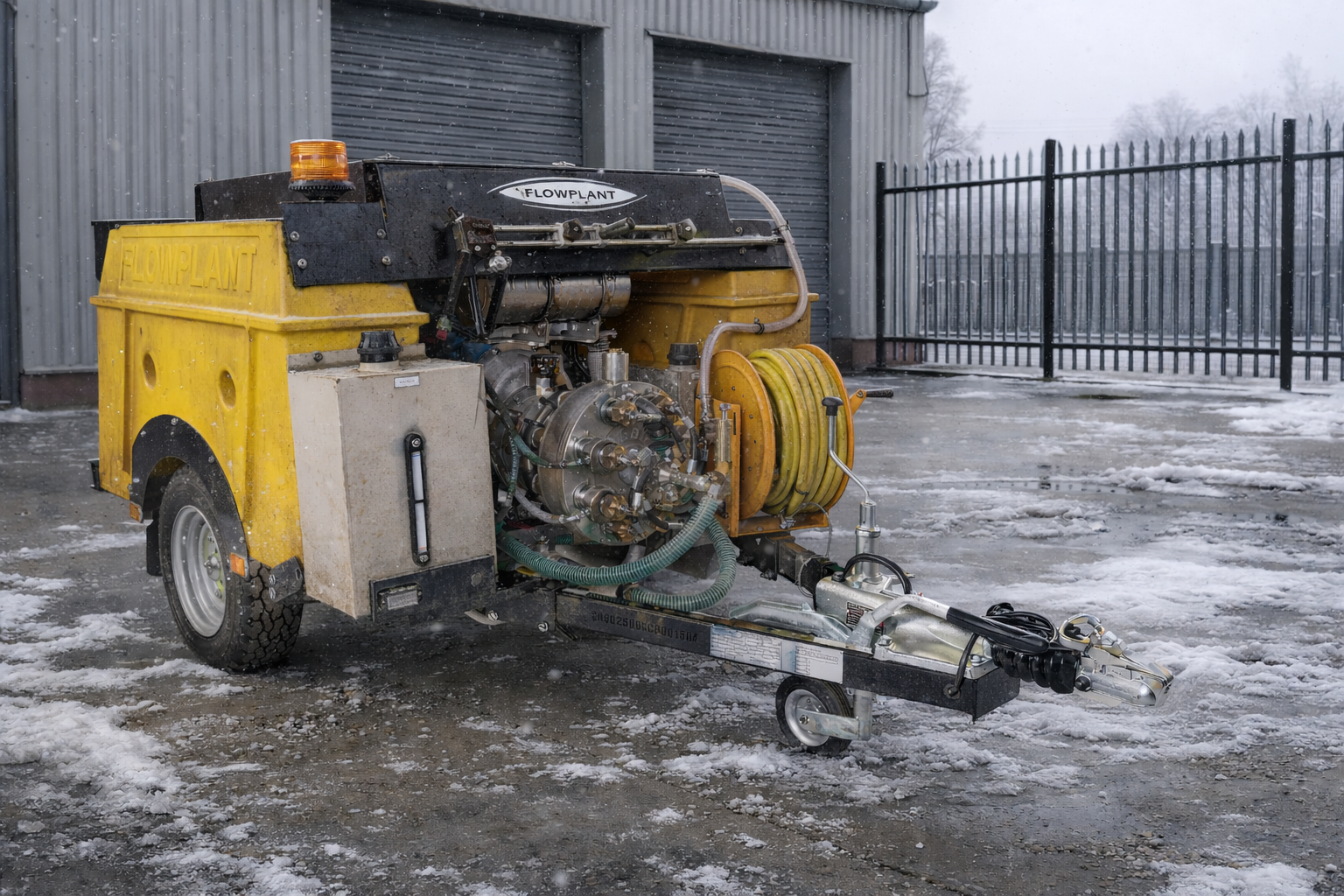
As winter approaches, falling temperatures present a serious risk to high-pressure jetting equipment. Frozen pumps, hoses and components can lead to costly repairs, unexpected downtime and, most importantly, significant safety risks for operators.
Preparing your jetter for winter is an essential process. To help customers protect their equipment and operate safely through colder months, we’ve outlined five key considerations every jetter operator should follow.
1. Anti-freeze: a crucial defensive measure
Used correctly, anti-freeze plays a vital role in protecting jetting equipment against freezing conditions. It helps safeguard internal components, pipework and hoses from damage caused by expanding ice when temperatures drop below zero.
However, it’s important to remember that not all anti-freeze products are suitable for drain jetting applications. Selecting the correct type, and using it in line with manufacturer guidance, is critical.
2. Never operate equipment that may have frozen
If there is any possibility that your pump, hoses or system have frozen, do not attempt to start the unit.
Under no circumstances should a jetter be operated until the entire system has been fully thawed. Attempting to run frozen equipment can result in severe damage to critical components and poses a serious risk to operator safety. If in doubt, always stop and seek advice before proceeding .
3. Follow Flowplant’s recommended winter protection procedure
For drain jetters, we strongly advise following the Flowplant anti-freeze procedure and ensuring the entire system is properly protected against freezing. This includes the pump, hose reel, pipework and any accessories exposed to low temperatures.
Correct winterisation reduces the risk of damage and ensures equipment is ready to return to service quickly when conditions improve.
4. Environmental considerations matter
Flowplant recommends propylene glycol anti-freeze for drain jetting applications. This is a considered choice, based on its lower toxicity and improved environmental compatibility when compared with alternative products.
In an era of increased environmental responsibility, using the correct anti-freeze helps protect not only your equipment, but also the environment it operates in .
5. A simple winter checklist for operators
In summary:
- Do anti-freeze your jetter if temperatures may fall below freezing
- Always use the correct anti-freeze and follow manufacturer instructions
- Never attempt to start a jetter if freezing may have occurred
- Seek professional advice if you are unsure
Download our winter preparation poster
To help teams on site, we’ve created a clear, easy-to-follow poster outlining these five winter preparation tips.
👉 5 Tips for preparing your Jetter for winter This is ideal for workshops, depots and operator briefing areas.
Winter protection products available online
Flowplant also offers proven winter protection solutions, available directly from our website:
- Anti-Freeze for Jetting Equipment
👉 https://www.flowplant.com/product/anti-freeze/ - Freeze-Up Kit
👉 https://www.flowplant.com/product/freeze-up-kit/
Both products are designed to support safe, effective winterisation and help minimise the risk of freeze-related damage.
Need advice?
If you’d like guidance on winter-proofing your equipment or selecting the right anti-freeze solution, our team is here to help.
📞 Call 01722 325424 or get in touch via the website for advice tailored to your application.