News
What Equipment Do I Need for the Job? Here’s How We Build the Right Specification
Choosing the right jetting, pumping or specialist equipment can be challenging, especially when every application has unique requirements.
One of the most common questions our engineering team receives is:
“How do I know what equipment I need for this job?”
Whether you’re clearing blocked drains, carrying out non-destructive excavation, supporting oil and gas operations or tackling industrial cleaning projects, selecting the correct equipment is essential for safety, efficiency and ROI.
At Flowplant, every quotation starts by understanding your application, operational goals and working environment. Rather than offering a standard package, we engineer solutions around your operation.
Why Every Equipment Quote Is Different
No two customers are the same! Some work may seem similar but will require completely different solutions.
We work with variables like:
- Operating pressure
- Water flow rate
- Hose length requirements
- Site access restrictions
- Water capacity requirements
- Power source preferences
- Working hours and duty cycles
- Vehicle or trailer limitations
- Industry-specific regulations
Which all impact final specifications on a unit build. So what’s our quotation process? Read on…
Step 1: Understanding the Application
Before recommending equipment, our engineers take time to understand the work you’ll be carrying out.
Key questions include:
What are you cleaning, excavating or pumping?
Different applications demand different flow and pressure combinations.
For example:
- Drain cleaning typically requires high flow rates and moderate to high pressure.
- Hydro excavation often requires high water flow and vacuum recovery systems.
- Industrial cleaning may require higher pressures for removing deposits and contamination.
- Oil and gas applications frequently demand specialist equipment rated for demanding environments.
How often will the unit be used?
Daily operation places very different demands on equipment compared with occasional use.
This affects:
- Pump specification
- Engine selection
- Water tank sizing
- Hose reel capacity
- Component durability requirements
Step 2: Selecting the Correct Pump and Motor
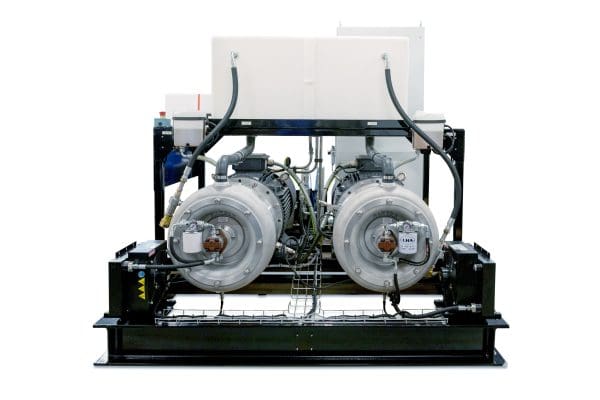
The pump is the heart of any water jetting system.
When developing a quotation, we calculate the ideal balance between:
Pressure (PSI or Bar)
Pressure helps break up blockages, remove debris and loosen deposits.
Flow (LPM or GPM)
Flow transports debris and material away from the work area.
Achieving the correct combination of pressure and flow is vital.
An oversized system can increase operating costs, while an underspecified unit will struggle with efficiency.
Our engineering team assesses:
- Job requirements
- Duty cycles
- Operator expectations
- Future growth plans
to ensure the equipment we build is sized correctly.
Step 3: Delivery Hose and Pipework Design
The delivery line has a significant impact on system performance, factors such as hose diameter, length and operating pressure all influence pressure losses throughout the system.
When creating a quotation we consider:
- Total hose length required
- Pipe and sewer dimensions
- Site access requirements
- Expected operating pressures
- Future equipment flexibility
This ensures maximum performance reaches the nozzle where it matters most.
Step 4: Return Lines and Water Management
Many applications require sophisticated water management systems, including:
- Return line design
- Water recirculation systems
- Filtration solutions
- Vacuum recovery integration
- Water storage requirements
A complete system calculation is carried out to ensure optimum performance across the entire hydraulic circuit.
Step 5: Frame Assembly and Vehicle Integration
The frame assembly forms the backbone of the equipment package, we consider:
- Vehicle payload limits
- Trailer capacity
- Operator access
- Maintenance accessibility
- Corrosion protection
- Long-term durability
Every frame assembly is designed to support the intended operational demands while maximising reliability and serviceability.
Step 6: Controls and Operator Safety
Modern equipment relies heavily on intelligent control systems, controls might include:
- Pressure regulation
- Engine management systems
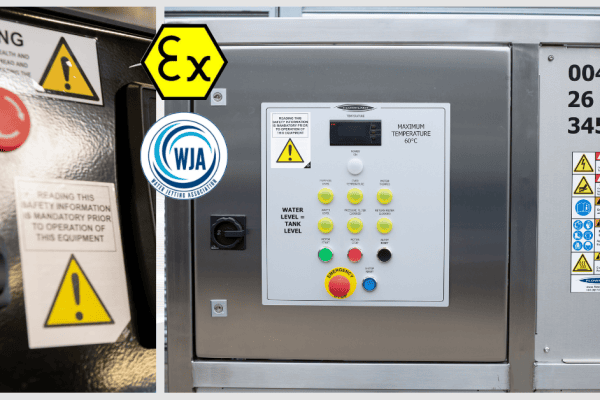
- Emergency shutdown controls
- Safety interlocks
- Remote operating capability
- Telemetry and monitoring systems
Well-designed controls improve productivity while helping operators work safely and efficiently.
Step 7: Quality Management and Manufacturing Standards
A quote includes far more than a list of components, we think about:
- Component quality
- Manufacturing methods
- System testing
- Compliance requirements
- Reliability expectations
- Lifetime operating costs
We build units within a structured quality management framework designed to deliver consistency, reliability and continuous improvement.
Frequently Asked Questions
How do I know what size jetter I need?
The correct jetter depends on pipe diameter, blockage type, cleaning distance, water availability and the frequency of use. Our engineering team assesses these factors during the quotation process.
How much pressure do I need for drain cleaning?
Pressure requirements vary significantly depending on application. Larger pipes and more challenging blockages often require different flow and pressure combinations than routine maintenance cleaning.
Can Flowplant build bespoke units?
Yes. Many of our customers require bespoke specifications tailored to operational, vehicle and industry requirements. Our engineering team regularly develops custom configurations for specialist applications.
Do you only supply drainage equipment?
No. Flowplant equipment is used across a wide variety of industries including drainage, sewer maintenance, utilities, telecommunications, industrial cleaning, rail, petrochemical and oil and gas sectors.
Typical Applications by Industry
| Industry | Common Application | Typical Equipment Type | Typical Specification Range | Example Flowplant Solution |
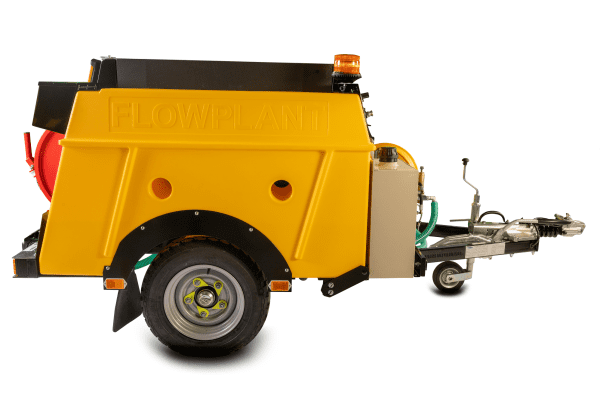
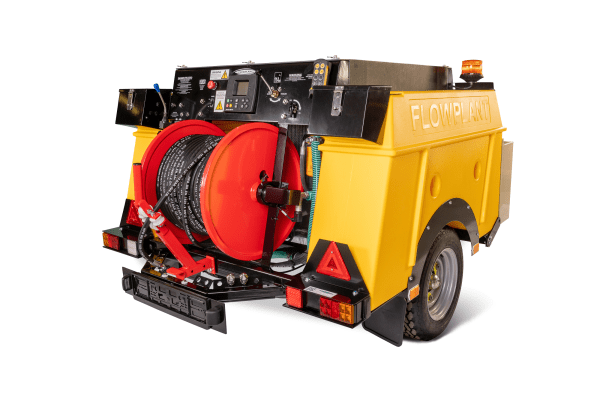
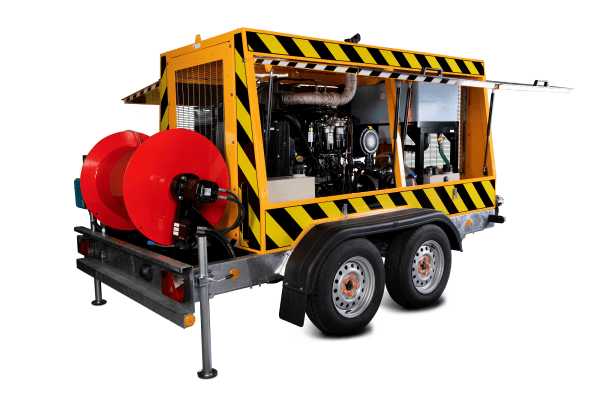
| Drain & Sewer | Blockage removal, sewer jetting, root cutting, preventative maintenance | Van Pack Jetter, Trailer Jetter, Combination Jetter | 150-300 Bar, 30-120 LPM | Eco Van Pack Range, Mini Petrol Van Pack, Trailer Jetters |
| Drain & Sewer | Municipal sewer maintenance | High-capacity jetting systems | 200-250 Bar, 100-400 LPM | Recycler and Combination Units |
| Telecoms & Utilities | Fibre installation, cable trenching, non-destructive excavation | Hydro Excavation Unit | High flow water systems with vacuum recovery | Specialist Hydro Excavation Solutions |
| Telecoms & Utilities | Utility locating and potholing | Trailer-mounted water jetting systems | 150-250 Bar, 30-80 LPM | Custom Utility Support Units |
| Oil & Gas | Tank cleaning, maintenance shutdowns, specialist cleaning operations | High-pressure jetting systems | 500-1500+ Bar depending on application | Bespoke High-Pressure Systems |
| Oil & Gas | Refinery and petrochemical cleaning | Industrial jetting packages | High-pressure and high-duty-cycle configurations | Custom Engineered Skids |
| Industrial | Factory cleaning, surface preparation, process line cleaning | Static or trailer-mounted jetting units | 200-1000 Bar depending on process | Industrial Jetting Systems |
| Industrial | Plant maintenance and shutdown support | Bespoke cleaning packages | Application-specific pressure and flow combinations | Engineered Pumping & Jetting Solutions |
Speak to Our Engineers
Not sure which equipment is right for your application?
Our team can help you determine the ideal pump, motor, delivery system, controls and configuration based on your operational requirements. Whether you need a compact van pack jetter, a high-capacity recycler, a hydro excavation solution or a fully bespoke industrial system, we’ll create a specification tailored to your needs.
Contact Flowplant today for expert advice and a quotation designed around your application, performance requirements and future growth plans.